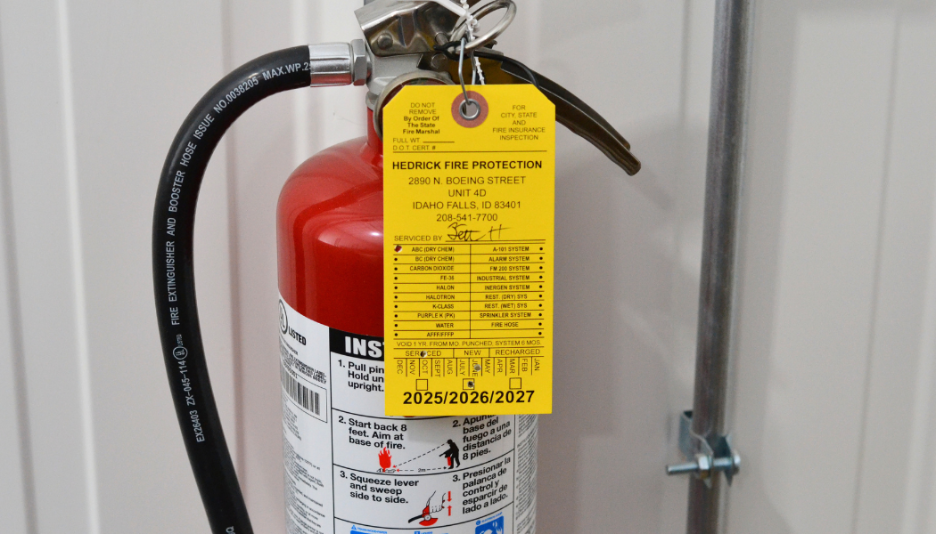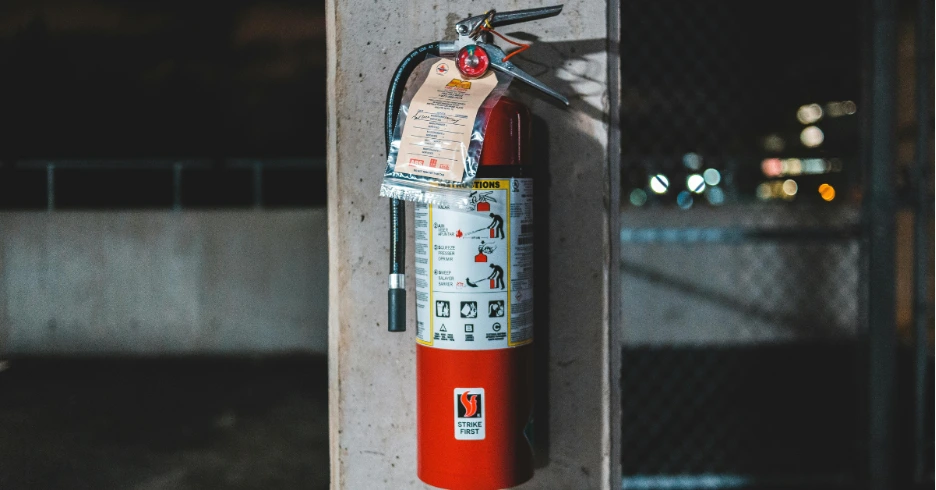
Does a Fire Extinguisher Need to Be Mounted on the Wall?
You bought a fire extinguisher, you brought it home or set it in the corner of the shop, and now it's sitting on the floor next to the cabinet it's supposed to protect. It's there, it's accessible, and moving it feels like a whole project. So, does it actually need to go on the wall?
Yes. And the reason isn't just bureaucratic box-checking.
Knowing the "why" behind a requirement matters as much as knowing the rule itself, so here's what NFPA 10 actually says, why floor placement fails in practice, and what proper mounting actually takes.
Need Fire Extinguisher Mounted?? Call Now! or Learn More!
What NFPA 10 Says
NFPA 10, the standard that governs portable fire extinguisher installation and maintenance, sets specific mounting height requirements based on the weight of the extinguisher.
- Extinguishers weighing 40 pounds or less (which covers most standard home and small business units) must be installed, so the handle is no higher than 5 feet from the floor.
- Extinguishers weighing more than 40 pounds must be installed, so the handle is no higher than 3.5 feet from the floor, making them easier to lift and carry without straining.
- The bottom of the extinguisher, regardless of weight, must be at least 4 inches off the floor.
That last point is the one that makes floor placement a code violation, not a technicality. An extinguisher sitting flat on the floor has zero clearance underneath it, which puts it below the minimum installation standard even before you get to the accessibility and damage concerns.
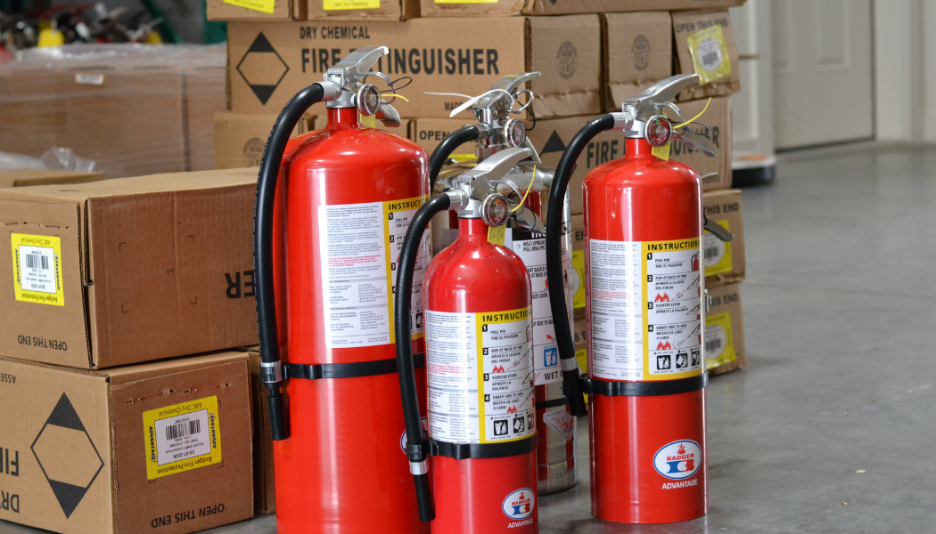
Why Floor Placement Fails in Practice
The code requirement exists for real reasons. Understanding those reasons makes it easier to explain to anyone who pushes back on mounting.
Accessibility under stress. Reaching down to grab a floor-level extinguisher in an emergency, especially in a smoke-filled room, is significantly harder than grabbing one at waist or chest height from a wall mount. Seconds matter in a small fire situation, and anything that slows down the grab is working against you.
Damage from foot traffic and equipment. An extinguisher on the floor in a shop, kitchen, or garage is in the path of forklifts, carts, mops, and feet. Cylinder dents and valve damage from being knocked over or rolled into are among the most common reasons extinguishers fail inspection, and almost all of them happen to floor-placed units.
Water and moisture exposure. Floors flood before walls do. A unit sitting on a concrete floor in a garage, basement, or equipment room is the first thing to sit in standing water after a leak or heavy rain. Moisture at the base of a cylinder is exactly how corrosion starts, usually in a spot that's hard to see during a quick visual check.
It becomes invisible. A wall-mounted extinguisher at eye level, ideally with a clearly marked sign above it, is something people see and remember. An extinguisher tucked in the corner behind a mop bucket gets forgotten until someone needs it and can't find it.
Checkout all our Fire Extinguisher Services @HedrickServices!

"What If I Can't Mount It on the Wall?"
This comes up more often than you'd think, usually in rented spaces, temporary setups, or situations where the nearest wall is a concrete block with no easy anchor point.
A few legitimate options:
- Floor stands and rolling stands. These are purpose-built bases that hold the extinguisher upright and off the floor, satisfying the 4-inch clearance requirement while providing a freestanding alternative to wall mounting. They're common in industrial and warehouse settings where wall mounting isn't practical.
- Cabinet mounts. A surface-mounted extinguisher cabinet achieves the same result as a wall bracket while offering the added benefit of protecting the unit from the kind of incidental contact and moisture that causes inspection failures.
- Vehicle and equipment mounts. For extinguishers in vehicles, forklifts, or heavy equipment, purpose-built vehicle brackets satisfy both the mounting requirement and the vibration/movement concern that a standard wall bracket doesn't address.
The common thread in all of these is that the floor itself is never the answer, but the wall isn't the only alternative.
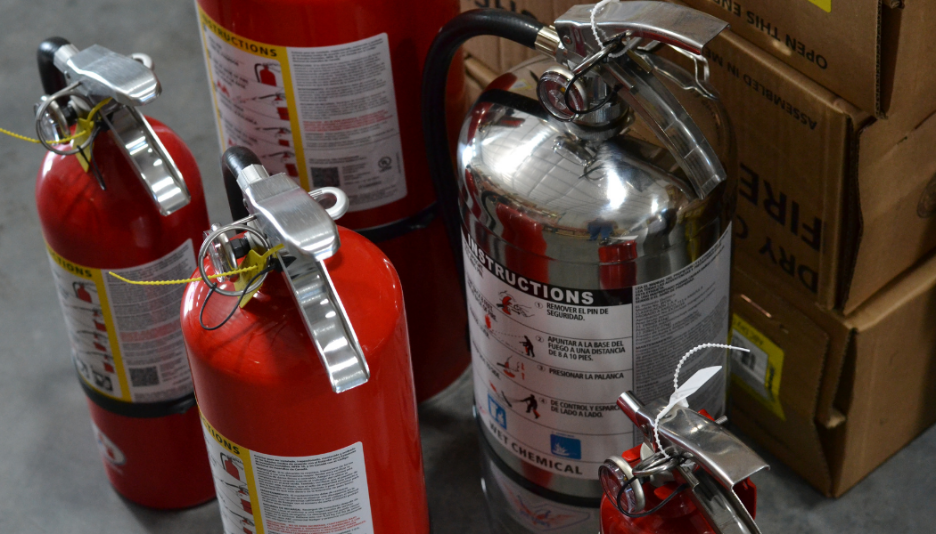
Common Myths About Mounting
Myth: As long as I can reach it, placement doesn't matter.
Reality: Reachability is one part of the requirement, not the whole thing. Height, clearance, and visibility are all separate factors that floor placement fails on simultaneously.
Myth: My extinguisher came with a mounting bracket, but I don't have to use it.
Reality: That bracket isn't optional hardware. It's part of a compliant installation. An extinguisher sitting unpackaged next to its unused bracket on the floor is still a code violation.
Myth: Inspectors only check whether an extinguisher is present, not how it's installed.
Reality: Mounting height, clearance, and signage are standard items on any professional inspection. A floor-placed unit will be cited, and depending on the severity of the violation, can result in a red tag just as easily as a unit with a failed gauge.
For the Professionals
Improper mounting is one of the most consistent findings on commercial inspections, and it's almost always a quick fix that the customer assumed wasn't necessary. When you're quoting a new installation or doing an annual inspection, a visual check of mounting height and clearance takes thirty seconds and prevents a callback. If you're regularly stocking brackets, floor stands, and cabinet mounts for customer installs, HedrickPro carries the mounting hardware to keep your van ready for whatever the job turns up.
Keep It Simple
Mount it on the wall, or on a purpose-built floor stand if wall mounting isn't an option. Handle height no higher than 5 feet for standard units, bottom of the cylinder at least 4 inches off the floor. If it's sitting flat on the ground, it's not compliant, regardless of how accessible it feels.
Need a bracket, floor stand, or cabinet mount to get your extinguisher properly installed? Shop our full line of mounting hardware and fire extinguishers today, or contact us if you want help figuring out the right setup for your space. At Pro Fire and Safety, the right extinguisher in the wrong place is still the wrong answer.